
Disclosure: RecoveryYard is reader-supported. Some links in this article may be affiliate links, which means we may earn a commission at no extra cost to you.
Choosing between an infrared vs traditional sauna is the first big decision when buying a home sauna.
The two types feel different, install differently and cost different amounts to run. This guide compares them side by side so you can pick the one that fits your home, budget and routine.
Infrared vs Traditional Sauna: The Quick Answer
Choose infrared if you want lower air temperatures, a faster warm-up and an indoor unit that may run on a standard outlet. Choose traditional if you want the classic hot, steamy Finnish experience, with water on the stones, and you have space and budget for a 240V electrical install or a wood-burning stove.
| Infrared sauna | Traditional sauna | |
|---|---|---|
| Typical air temperature | About 110–140°F | About 150–195°F |
| Warm-up time | About 10–20 minutes | About 30–60 minutes |
| Steam (water on stones) | No | Yes |
| Power | Many small units use a 120V outlet; larger ones need 240V | Usually a dedicated 240V circuit, or wood-fired |
| Where it goes | Mostly indoors | Indoors or outdoors (barrel and cabin styles) |
| Typical price range | About $2,000–$10,000+ | About $4,000–$20,000+ installed |
| Feel | Gentle, dry radiant warmth | Intense heat, humid when you add water |
Figures are typical ranges across the market. Always check the specific model’s specification sheet.
How each type works
Traditional saunas heat the air. An electric heater or wood stove warms a pile of rocks, which heats the whole room. Pouring water over the stones creates a burst of steam (called löyly in Finnish) that makes the room feel hotter and more humid.
Infrared saunas heat you more than the air. Infrared panels in the walls emit radiant heat that warms your body directly, much like sitting in sunshine on a cool day. The air stays cooler, so sessions feel gentler, but there’s no steam.
Some brands now sell hybrid saunas that combine a traditional heater with infrared panels, so you can switch between the two.
Key differences that matter for your home
1. Heat and feel
Traditional saunas run much hotter and, with steam, feel intense. Many people love that classic experience. Infrared runs cooler and drier, which some people find easier to sit in for longer. Neither is “better” — it comes down to the experience you want.
2. Warm-up time
Infrared saunas are usually ready in 10–20 minutes. Traditional saunas typically take 30–60 minutes to heat the room and the stones. If you want a quick session before work, infrared is more convenient. Many modern traditional heaters offer app or Wi-Fi control, so you can start warming up remotely.
3. Electrical and installation
This is often the deciding factor:
- Infrared: many 1–2 person units plug into a standard 120V outlet, ideally on a dedicated circuit. Larger units often need 240V.
- Traditional: electric heaters (commonly 4.5–9 kW) usually need a dedicated 240V circuit installed by a licensed electrician. Wood-fired models need no electricity but need a chimney, safe clearances and a local permit check.
- Outdoor saunas: need a level, solid base (gravel or concrete pad) plus a power run from the house, or a wood stove.
Budget for an electrician. Depending on distance from your panel, this can add several hundred to a few thousand dollars.
4. Running costs
Infrared heaters draw less power and heat up faster, so they usually cost less per session.
| Estimate per session | Infrared (≈2 kW, ~1 hr) | Traditional (≈6 kW, ~1.5 hrs incl. warm-up) |
|---|---|---|
| Energy used | ≈2 kWh | ≈9 kWh |
| Cost at $0.17/kWh | ≈$0.35 | ≈$1.50 |
Rough estimates. Your cost depends on your electricity rate, heater size, insulation and climate, especially for outdoor saunas in winter.
5. Purchase price
Entry-level infrared saunas start around $2,000, and premium models run $6,000–$10,000+. Traditional saunas, especially outdoor barrel and cabin styles, typically cost $4,000–$20,000+ once you add the heater, base and electrical work.
6. Space
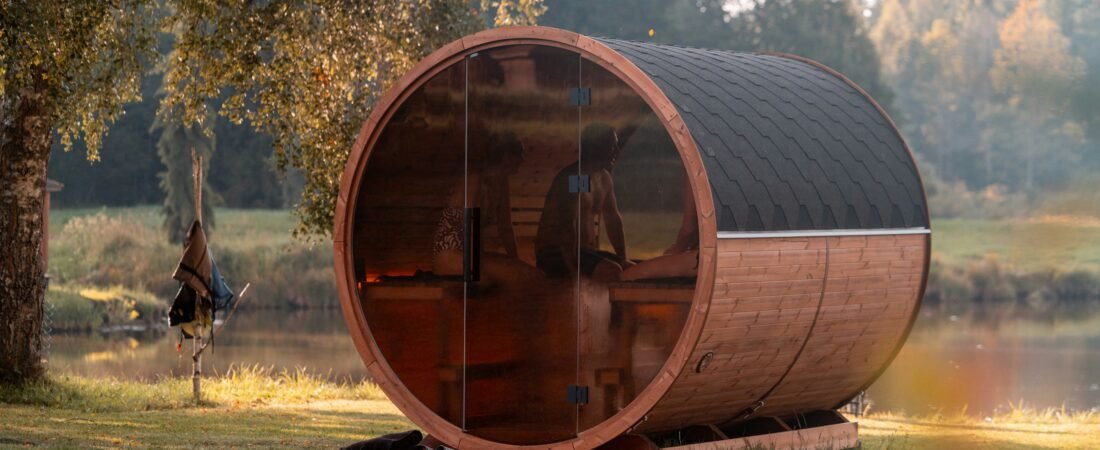
Infrared cabins are compact and fit in a spare room, basement or garage. Traditional saunas can go indoors too, but outdoor barrel and cabin saunas are popular because they keep heat and humidity out of the house.
7. Maintenance
Both are low-maintenance. Wipe down benches, keep the sauna ventilated and dry, and check panels or heater elements occasionally. Outdoor wooden saunas need periodic exterior treatment, and wood-fired stoves need ash and chimney cleaning.
Which should you choose?
An infrared sauna is likely the better fit if you:
- Want a sauna indoors in a spare room, basement or garage
- Prefer a gentler, drier heat
- Want short, frequent sessions with a quick warm-up
- Want to avoid major electrical work (check the model’s power requirements)
- Have a budget around $2,000–$6,000
A traditional sauna is likely the better fit if you:
- Want the authentic Finnish experience with steam
- Have backyard space for an outdoor barrel or cabin sauna
- Like very high heat and longer, social sessions
- Are happy to install a 240V circuit or a wood stove
- Want a sauna that’s a design feature of your garden
Can’t decide? Look at hybrid models, or try both at a local spa or gym before you buy.
Brands worth considering
These brands cover both types at different price points. Check each brand’s site for current models, prices and warranty terms.
- SaunaCloud: premium indoor and outdoor saunas, including traditional and infrared options. A strong choice if you want a high-end, design-led sauna.
- Sauna Kit Company: indoor and outdoor saunas, including traditional wood-burning, electric and infrared models. A good place to compare both types from one seller.
- Sunlighten: one of the best-known infrared-only brands, with several cabin collections and a portable option.
- Peak Saunas: direct-to-consumer infrared saunas, aimed at buyers who want features at a lower price than the premium brands.
Frequently Asked Questions
Is an infrared sauna cheaper to run than a traditional sauna?
Usually, yes. Infrared heaters typically use less power and heat up faster, so each session costs less, often well under $1 versus a dollar or two for a traditional electric sauna. Your actual cost depends on your electricity rate and how long you use it.
Do I need an electrician to install a sauna?
For most traditional electric saunas, yes, because they need a dedicated 240V circuit. Many small infrared saunas plug into a standard outlet, but larger models may need 240V. Always check the manufacturer’s requirements and local codes.
Can I put an infrared sauna outside?
Only if it’s specifically designed for outdoor use. Most infrared saunas are built for indoor use. Several brands now make outdoor infrared and hybrid models.
Can you pour water on the stones in an infrared sauna?
No. Infrared saunas don’t have sauna stones, and water should never be poured on infrared panels. If you want steam, choose a traditional or hybrid sauna.
Which is easier to fit in a house?
Infrared. Units are often compact, run cooler and produce no steam, so they suit basements, garages and spare rooms.
How long does a sauna last?
A well-built sauna that’s cared for can last many years. Check the warranty on the cabin, heater and electronics separately, as they often differ.
The bottom line
If convenience, indoor placement and lower running costs matter most, go infrared. If you want the classic hot-and-steamy experience and have backyard space, go traditional. Whichever you choose, factor in installation and electrical costs, not just the sticker price.
Safety note: saunas aren’t suitable for everyone. If you’re pregnant, have a heart condition or other medical condition, or take medication, talk to your doctor before using a sauna. See our Medical Disclaimer.